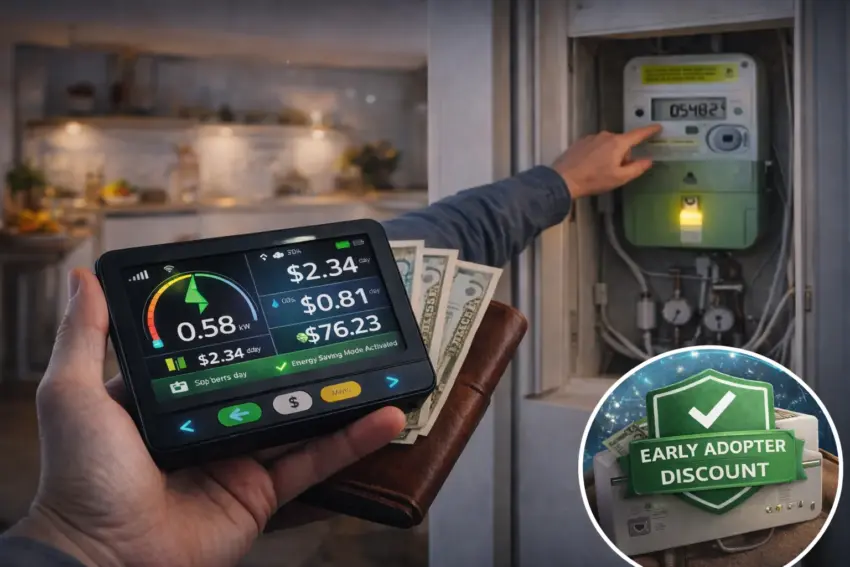
Energy providers in Germany are offering discounts and bonus programs to encourage early adoption of smart meters, as utilities accelerate the modernization of grids and billing systems. The incentives are typically aimed at customers who agree to installation early, activate digital services, or choose tariffs that work better with time-based consumption patterns.
Providers argue that smart meters can reduce administrative costs and improve forecasting, while customers may benefit from more detailed consumption insights and, in some cases, better-priced tariffs. Consumer groups, however, stress that offers should be easy to compare and that customers should understand what changes in billing, data handling, and contract terms once a smart meter is installed.
What “smart meter discounts” usually look like
Incentives vary by supplier and region, but common models include:
- One-time sign-up bonuses for customers who book an installation appointment within a limited window.
- Monthly bill credits applied for a defined promotional period after activation.
- Reduced service fees for digital billing, automated readings, or app-based account management.
- Bundled tariffs that combine smart metering with dynamic or time-of-use pricing options.
- Loyalty incentives linked to staying on a contract for a minimum duration after installation.
Some providers also market smart meter adoption as a prerequisite for accessing certain “smart” tariffs—especially those that promise better rates for shifting consumption to off-peak hours.
Why utilities want early adopters
Utilities and network operators see smart meters as foundational infrastructure for a more flexible energy system. As more households adopt heat pumps, electric vehicles, and rooftop solar, real-time or near real-time consumption data can improve load management and support more responsive tariff models.
From an operational perspective, smart meters can reduce manual meter reading, lower error rates, and speed up processes such as moving house, switching suppliers, and correcting estimated bills.
What customers can gain beyond the discount
For households that actively use the data, smart meters can make consumption patterns visible—highlighting standby loads, inefficient appliances, or spikes linked to heating and hot water. For some customers, that transparency can translate into savings even without a special tariff.
Smart meters can also support new use cases, including:
- Time-of-use pricing where electricity is cheaper at certain times.
- EV charging optimization to avoid peak rates and reduce grid stress.
- Solar self-consumption tracking to better manage household generation and usage.
- Faster billing accuracy with fewer estimated readings.
“The discount is the hook, but the long-term value depends on whether customers can actually use the data and access tariffs that reward flexibility.”
Key questions to check before signing up
Consumer advisers recommend checking the full cost and conditions of the offer, not just the headline discount. Important points include:
- Any ongoing meter-related fees and whether the discount offsets them.
- Contract duration and whether a bonus requires a minimum term.
- Tariff structure, especially if it includes time-based pricing that could raise costs for households that cannot shift usage.
- Data access and privacy: what data is collected, how granular it is, and who can access it.
- Installation logistics: appointment availability, required access to the meter location, and what happens if installation is delayed.
Potential drawbacks and concerns
Critics warn that discounts can obscure the long-term economics if customers end up paying higher base rates or fees. Others highlight that not every household benefits equally from time-of-use pricing—especially people with fixed schedules who cannot shift cooking, laundry, or heating. There are also concerns about how clearly providers explain data handling and what level of transparency exists around automated decisions in dynamic tariffs.
Energy providers respond that customers typically retain the ability to choose standard tariffs and that smart meters can improve billing accuracy and service quality even without dynamic pricing.
What happens next
As smart meter rollouts expand, discounts for early adopters may become less generous, while more specialized tariffs become available. The key trend is a gradual shift from “smart meters as hardware” to “smart meters as a gateway” for new pricing and services—making it increasingly important for customers to compare offers based on the total cost, the tariff rules, and how well the plan fits their daily consumption patterns.